From Patterned Wallpaper to Plain Fabric: A Short History of the Feature Wall
Feature wall history traces how wallpaper, paint and fabric distinguished one surface, showing how rooms gathered attention without relying on bold colour.
The most common mistake in telling feature wall history is to begin with the modern painted accent wall, as if singling out one surface were a recent invention. That shortcut costs a fuller account of how rooms have gathered decoration: a wall could stand apart through pattern, texture, construction or its relationship to nearby furnishings.
What counted as a decorated wall before the feature wall?
Older interiors could combine carved panelling, woven hangings, painted surfaces, textiles and framed pictures. These elements might cover several walls or concentrate around a particular area; the arrangement depended on the room and its furnishings, not on a universal rule that one wall should serve as a focal point.
In an elaborate interior, timber panels could divide a wall into fields, with pictures and ornament contributing to a larger composition. In a simpler room, a textile or image might distinguish one area without making the other walls an intentionally neutral backdrop. The contrast associated with a modern accent wall was not always the purpose.
Portable wall hangings complicate the story further. A tapestry or other textile could bring pattern and texture to a wall, then be moved or removed. The surface gained visual importance through an object placed against it, rather than through a wall treated as a separate decorating project.
How did wallpaper make emphasis easier?
Wallpaper offered a domestic option for covering walls with repeating patterns, imitations of other materials or coloured grounds. Its availability, production and cost varied across places and periods, so it is safer to describe it as an expanding set of choices than as a single, steady shift in household decorating.
Wallpaper did not automatically create a feature wall. A room papered throughout could have a continuous scheme; a single patterned surface became more distinct when the other walls had a different finish. Furniture, trim and architectural divisions also affected whether the paper read as a focal point or as part of the room’s overall decoration.
Limiting a strong pattern could reduce visual competition among surfaces, but that is not a timeless decorating rule. Preferences differed, and a patterned wall could be valued for its own sake or for how it worked with the rest of the room. What counted as fashionable or restrained also varied by household and period.
Why did painted accent walls become familiar?
Paint offered a direct way to colour a wall, and a painted surface could be changed without replacing a patterned covering. In rooms with plain finishes, one wall in a contrasting colour made the difference easy to see. But without dates or a particular place in view, it is better not to present the accent wall as the result of one broad, uniform shift toward simpler interiors.
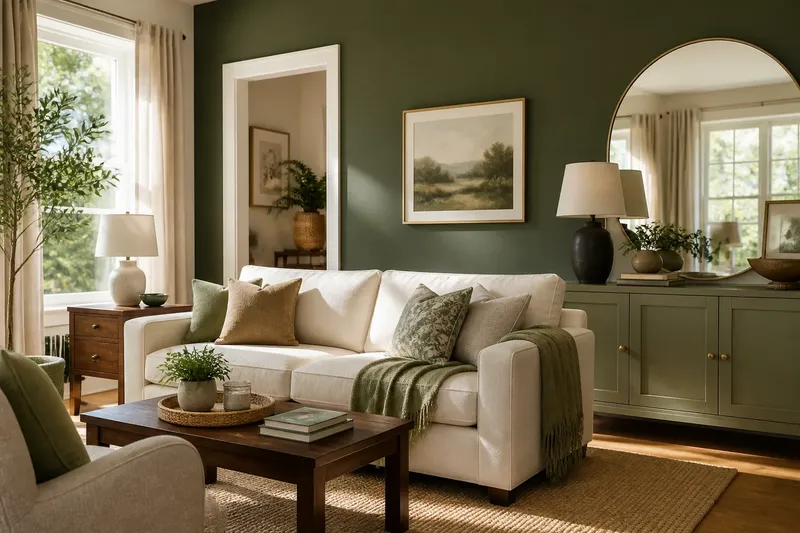
A painted accent wall also differs from wallpaper in what carries the emphasis. Colour may do the work without a repeating motif, while a papered wall can draw attention through pattern and scale. In either case, the chosen surface depends on the visual company it keeps.
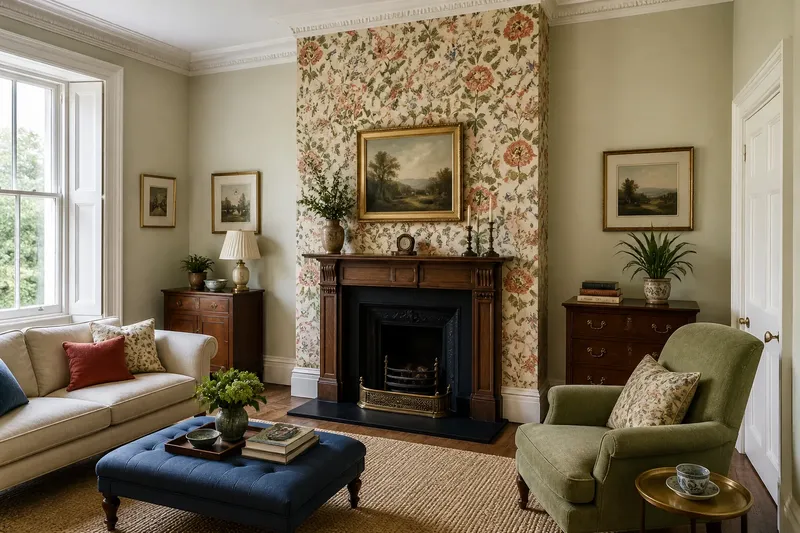
Say a household has a sitting room with dense floral wallpaper, a wooden mantel and framed pictures. In this invented situation, the household replaces the paper with plain paint on most walls and uses a narrow stripe behind the mantel. The visible result is a clearer hierarchy: the mantel wall becomes the room’s most patterned surface, while the other walls recede. That change illustrates one possible arrangement, not a general account of how decorating tastes changed.
What did plain fabric add to the story?
Fabric could distinguish a wall through texture and construction, even when its colour and pattern were subdued. Upholstered panels or stretched cloth brought a surface closer to the visual language of furnishings than to a flat painted field.
A fabric wall need not announce itself through strong contrast. Seams, padding, panel layout or its connection to a bed or seating area could give it presence. This broadens the idea of a feature wall beyond bold colour and printed pattern.
Textile treatments were not necessarily intended as single-wall statements, just as plain fabric does not belong to one decorative era. Patterned paper, paint and cloth offered different ways to distinguish a surface, used in arrangements shaped by local practice and household circumstances.
What questions clarify feature wall history?
Did wallpaper begin as a way to make one wall stand out?
No. Wallpaper could cover a room as a continuous finish, and its patterns were not inherently reserved for one focal surface. A single-wall effect depended on how the paper differed from the other finishes.
Was the feature wall always a sign of wealth?
No single interpretation fits every room or period. Elaborate panel work or fine textiles could involve resources and skilled work, while less elaborate materials could still give a wall distinction through placement or contrast.
Why use plain fabric on a wall?
Fabric could add texture and a constructed surface without a conspicuous printed repeat. Its distinction might come from softness, seams or its relationship to nearby furnishings rather than from strong colour contrast.
Is a modern accent wall the same as an older decorated wall?
They share the idea of concentrated emphasis, but their materials and purposes can differ. Older decorative surfaces often belonged to a broader room scheme, while a modern accent wall is commonly treated as an intentionally distinct plane.
What is not worth the effort when tracing this history?
Trying to identify one origin or an uninterrupted lineage is not useful. A tapestry, a papered chimney breast and a painted accent wall can all concentrate attention, but they were not necessarily understood as the same kind of decoration by the people who used them.
Feature wall history is best understood as a group of different choices about where decoration belongs. Wallpaper, paint and fabric each made a surface distinctive in a different way; the surrounding room determined how much that distinction mattered.
A useful last distinction is between a wall that attracts attention and a wall designed as an isolated statement. The first can emerge from the arrangement of furnishings and finishes; the second depends on a deliberate contrast with its companions. The difference is easy to miss, which is one reason the history resists a neat origin story.