Why a Room Can Look Brighter Without Adding More Light
Room brightness depends on surfaces, contrast and reflective finishes; learn what to adjust before changing a lamp or adding another fixture.
The common mistake in a dim-looking room is to buy a brighter bulb before checking what the room is doing with the light it already has. A room can look brighter without adding more light when its surfaces return light more effectively, its contrasts are less abrupt, or reflective finishes sit where they can catch a useful view.
That does not mean painting everything white or covering the room in glossy paint. The useful question is where brightness seems to disappear: into a dark wall, a sharp contrast, a dull finish, or an object that reflects the wrong thing.
Why does the room still look dim with the lights on?
A dark floor, deep-coloured wall or large upholstered piece can absorb more of the light reaching it than a pale surface would. The fixture may be doing its job, but the room’s largest visible planes remain dark, so the overall impression stays subdued.
Look at the room from its usual viewing spot, such as the doorway or sofa. Identify the largest dark surfaces in that view before focusing on small accessories. A charcoal sofa may matter less than a broad, dark wall behind it; a dark rug can make the whole lower half of a room feel heavier.
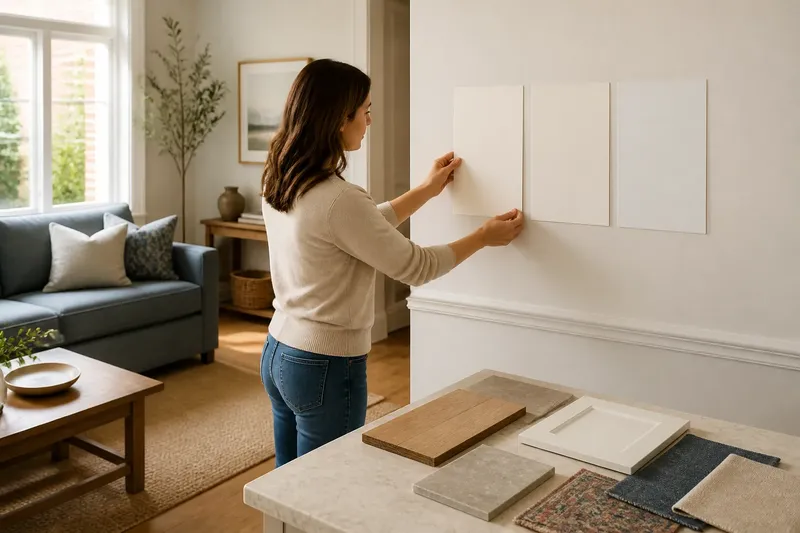
Try a reversible comparison before committing to paint or replacement furniture. Drape a pale throw over part of a dark sofa, or place a large light-coloured fabric sample against the wall. If that area reads more clearly while the rest of the room stays the same, the surface colour is contributing to the dim impression. If it barely changes, look next at contrast and finish.
Can a dark surface make pale areas seem dull?
Yes. The eye judges brightness by comparison, not in isolation. A small bright lampshade beside a nearly black wall may look crisp, while a pale wall next to that same dark field can seem muted because the difference between them dominates the view.
Where contrast feels harsh, soften the transition rather than automatically lightening every dark item. A middle-value cushion, a natural wood side table, or artwork with both pale and deeper tones can create a visual bridge. The aim is not to erase contrast; it is to stop one dark expanse from making every nearby surface seem weaker.
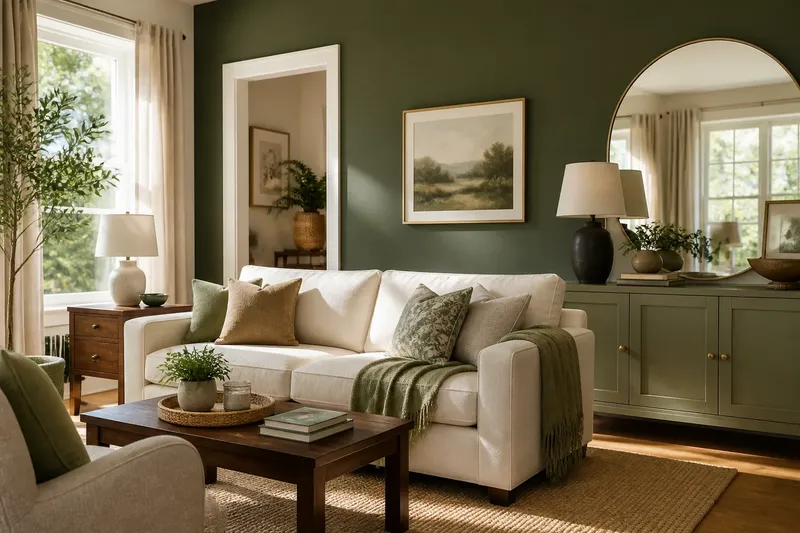
Say you have a deep green wall, a cream sofa and a dark wood coffee table, and the sofa seems oddly grey. Imagine moving the table to a less prominent position and adding a muted green cushion to the sofa. The expected visible result is a gentler transition from wall to seating, making the cream fabric easier to read without changing the room’s light sources.
Where should reflective finishes go?
Reflective materials help most when they return a useful view into the room. A mirror facing a bright window may bring the window’s image into a darker corner; a satin-finish cabinet near a lamp can pick up a soft highlight. The same mirror aimed at a blank wall merely repeats the blank wall with unusual confidence.
Notice what a finish reflects from the places where you sit and enter. Glass, polished metal, glazed ceramic and glossy paint can all create highlights, but their effect depends on angle, scale and what lies opposite. A small reflective object is unlikely to transform a room; a broad mirror or a cabinet door may have more visible influence.
Move a freestanding mirror or reflective tray temporarily and compare the view from the main seating position. Avoid placing a mirror where it catches clutter or produces an irritating glare. Reflective finish is not a substitute for useful illumination, and it need not be used on every surface. The room is not improved by making every object capable of reflecting the television.
What should you check before changing a finish?
- Largest dark plane: Identify the wall, floor, curtain or furniture piece occupying the most visible area. Try a light fabric sample or movable cover before considering a permanent colour change.
- Sharpest contrast: Notice whether a very dark object sits against a pale one. Add or reposition a middle-coloured item and see whether the boundary feels less severe.
- Finish under existing light: Compare matte, satin and glossy samples in the room at the times you normally use it. Keep the sample near its intended surface rather than judging it under store lighting.
- Reflection direction: Check what a mirror, glass top or polished cabinet reflects from your usual viewpoint. Turn or move it if the reflected scene is dark, busy or glaring.
- Visual clutter: Look for many small objects interrupting a large pale surface. Grouping a few objects on a tray or clearing a section of tabletop can let the surface read as one brighter plane.
- One change at a time: Alter a single surface or object, then look again from the same spot. This makes it easier to tell whether the room feels clearer or merely different.
For paint, flooring and finish choices, follow the product label and manufacturer’s instructions; appearance can vary with the surface and the light falling on it.
Why does a glossy finish sometimes make things worse?
Gloss does not simply make a room brighter. It concentrates reflections into visible highlights, which can make a wall look uneven or draw attention to every ripple and mark. A satin finish often gives a softer response, while matte surfaces scatter reflections more broadly and can make colour feel quieter.
Use gloss selectively where a clear highlight is welcome, such as a small ceramic lamp base or a cabinet detail. For a large wall with uneven patches, adding sheen may make those patches more noticeable. A modest sample viewed in both daylight and the room’s usual evening conditions is more informative than a finish name alone.
What questions help diagnose a dim-looking room?
Will painting every wall pale make the room brighter?
It may reduce the visual weight of broad dark surfaces, but an all-pale room can still feel flat if there is little variation in texture or contrast. Test the largest troublesome surface first, then decide whether other walls need the same treatment.
Does a mirror always make a room feel brighter?
No. A mirror returns whatever it faces, including a dark corner, clutter or direct glare. Place it where its reflected view is genuinely lighter and pleasant to look at from the room’s main vantage points.
Is a glossy wall brighter than a matte wall?
It can show stronger highlights, but that is not the same as making the whole wall appear evenly brighter. Matte and satin finishes may produce a calmer impression when the wall has visible texture or unevenness.
Should I replace dark furniture before changing anything else?
Not necessarily. Try a pale throw, a lighter cushion or a new position first, especially if the furniture is not the largest dark area in the room. A small, reversible adjustment can clarify whether the piece is the main cause.
Which changes are not worth the effort?
Replacing a collection of small dark accessories one by one is usually less useful than addressing one broad surface. Nor is it necessary to buy several mirrors or shiny objects in the hope that reflections will add up. If a change affects little of the room’s visible area, its effect on the overall impression is likely to be modest.
Start with the largest surface that looks heavy, then check contrast and reflection from the spot where the room is actually used. That is the practical way to make a room look brighter without adding more light: give the light already present a clearer, more useful set of surfaces to meet.